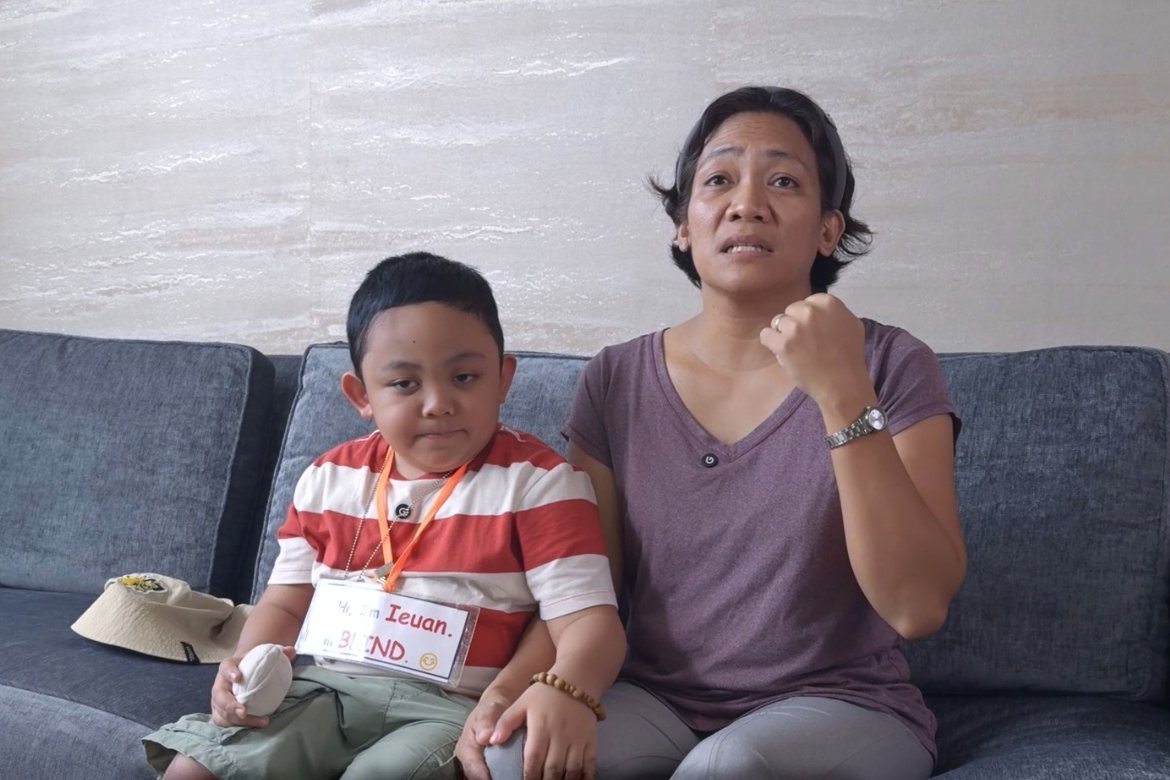
When a child falls ill, every decision feels heavier especially when it concerns the brain, vision, and the promise of a long life ahead.
For young Ieuan Carlo Magat, a brain tumour threatened not just his eyesight, but his future. His story reflects how advanced proton beam therapy is reshaping cancer treatment for children, offering precision, protection, and hope here in Singapore.
When subtle symptoms signal something more serious
Five-year-old Ieuan, a young child from La Union in the Philippines, did not show signs of pain or obvious distress when his condition began. Instead, it started quietly, as many childhood cancers do.
“We first found out about Ieuan’s condition when he [at age 4] started to practise reading,” his mother, Roda Shayne Magat, shares. “He need[ed] to put the book near his face [while reading].”
For many families, this would suggest a common vision problem — something correctable with glasses or a simple eye check. Ieuan’s parents believed the same.
Further screenings revealed a mass growing behind Ieuan’s eyes — a craniopharyngioma, a type of childhood cancer which was compressing on his optic nerves, resulting in poor vision and shorter than age growth.
Why early intervention matters in a child’s cancer journey
Initial consultations with Dr Lee Kuo Ann, radiation oncologist at Mount Elizabeth Hospitals, surgery was recommended to relieve pressure on the optic nerves and confirm the type of brain tumour. However, Ieuan’s journey to surgery was marked by a prolonged wait.
By the time surgery was performed at a hospital in the Philippines, the disease had already progressed.
“Before the surgery, he was already blind on the right side,” Roda explains. “After the surgery, he already lost his left eye vision. He was seeing total black.”
The surgery achieved partial success in reducing the size of the tumour but could not remove it entirely due to its location and proximity to critical brain structures.
“We had to offer radiotherapy to prevent it from recurring,” Dr Lee explains.
For childhood cancers, early access to the right care is often the most important factor shaping outcomes. Ieuan’s experience reflects how the timing of evaluation and treatment can influence long-term effects, particularly when the brain and vision are involved.
Why proton therapy was chosen for a young child
Reducing risk while treating the tumour
For children, radiation therapy must balance effectiveness with long-term safety. Conventional radiation can expose healthy brain tissue to unnecessary radiation, increasing the risk of cognitive impairment, developmental delays, and secondary cancers later in life.
“Because he is a young child, conventional radiation has higher risks to the normal brain,” Dr Lee explains, citing potential effects on “the IQ and memory and the development, as well as future radiation-induced cancer which could happen 10 or 20 years down the road.”
Proton therapy is an advanced form of radiation therapy that can be used alongside treatments such as surgery and chemotherapy.
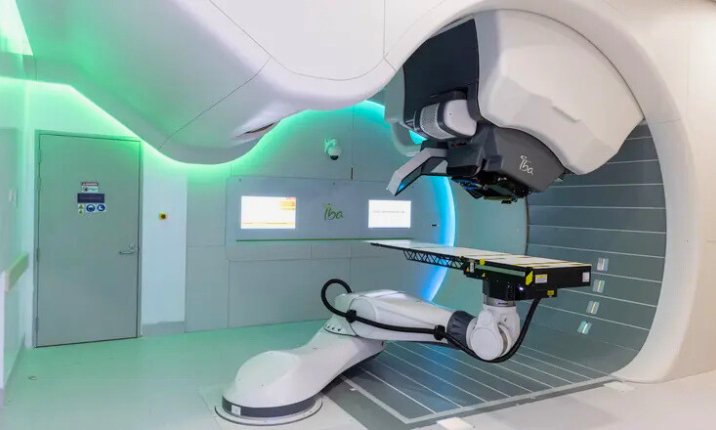
For young patients with brain tumours and conditions like Ieuan, it delivers radiation directly to the tumour while limiting exposure to surrounding healthy tissue, making it particularly well suited for children whose brains are still developing.
Key benefits of proton therapy for children
Key benefits of proton therapy include:
- Reduced radiation exposure to healthy tissues
- Lower risk of short- and long-term side effects in children
- Effective treatment for complex tumours near sensitive organs such as the brain and eyes
- Potentially reduced risk of radiation-induced secondary cancers later in life
“Proton therapy is able to reduce this dose by almost half,” he says. “It should better preserve his IQ as well as reduce the risk of complications down the road.”
Cancer treatment plan in Singapore
Ieuan’s treatment followed a carefully planned schedule at Mount Elizabeth Proton Therapy Centre:
- One session per day (30-minute pre-treatment preparation, with ~5-minute delivery of treatment)
- Monday to Friday
- Over 6 weeks, for a total of 30 treatments
“He comes every day, once a day, from Mondays to Fridays for six weeks,” Dr Lee shares. “After which it will be complete and then he’ll be free to go home.”
At the start of treatment, Ieuan’s tumour measured approximately six centimetres.
“If we can reduce that by three quarters or 80% and then let it stay at that size for the rest of his life, that would have been a good success,” Dr Lee explains.
Support beyond borders
Ieuan’s journey to Singapore was made possible through coordinated regional support. With coordination from IHH Healthcare Singapore – Philippine Office in Manila and Mount Elizabeth Novena Hospital, and additional support from ABS-CBN Foundation in sponsoring Ieuan’s flight helped make his treatment in Singapore possible.
“We are very thankful that they were able to come up with basically everything for us to be able to come here to Singapore and have him have his therapy here for proton,” Roda says.
Recovery following proton therapy
Today, Ieuan has returned to his hometown in the Philippines. While he has permanently lost vision in both eyes, he is recovering well after completing proton therapy, free from daily hospital visits and surrounded by family.
His recovery continues with regular follow-up. Ieuan undergoes MRI scans every 3 months in the Philippines, with CT scans performed when further procedures are needed. His mother shares the results with Dr Lee Kuo Ann, who continues to provide guidance on his ongoing care from Singapore
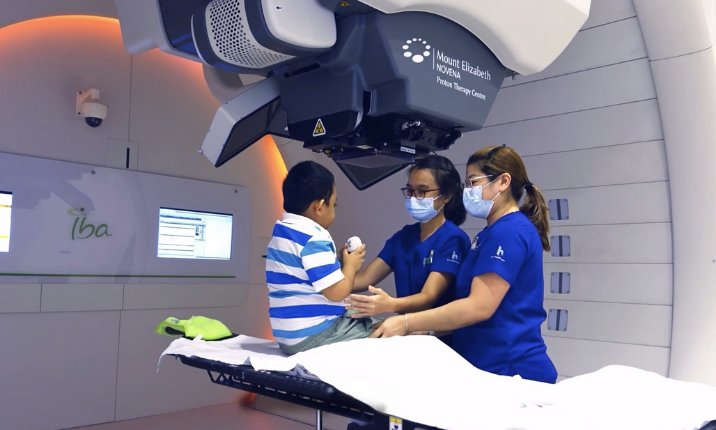
Ieuan’s experience shows how timing, together with access to advanced treatment options in Singapore, can shape outcomes in paediatric cancer care while protecting long-term health.
At Mount Elizabeth Hospitals Singapore, paediatric cancer care is shaped by precision, collaboration, and a long-term commitment to children’s health, supporting treatment today, but also the life that follows.